

The Importance of Endotoxin-Free Water in Bacterial Endotoxin Testing
Endotoxin-free water plays an important role in bacterial endotoxin testing. Since endotoxin contamination can affect analytical results, the water used during sample preparation and reagent handling must be carefully controlled.
Endotoxins are lipopolysaccharide components associated with the outer membrane of Gram-negative bacteria. They can produce strong biological effects and can also interfere with endotoxin detection procedures when introduced into the test system.
Why Use Endotoxin-Free Water?
The purpose of endotoxin-free water is to reduce the contribution of water-derived endotoxin to the assay. This helps laboratories distinguish endotoxin originating from the test sample from contamination introduced during the testing process.
Using properly qualified water is particularly important when performing quantitative endotoxin assays at low detection levels.
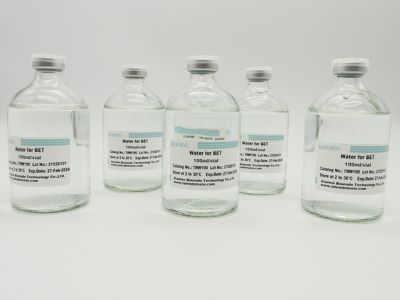
Common Uses
Reconstitution of lysate reagents
Dilution of Control Standard Endotoxin
Dilution of test samples
Preparation of endotoxin-free solutions
Endotoxin extraction procedures
Endotoxin-free water is not simply highly purified water. It should be appropriately qualified for endotoxin-sensitive applications.
Maintaining Reliable Results
Reliable endotoxin testing depends on controlling potential sources of contamination throughout the testing procedure. Water, tubes, pipette tips, microplates and other materials should all be suitable for endotoxin-sensitive workflows.
By using properly controlled endotoxin-free water and appropriate consumables, laboratories can reduce background contamination and improve the consistency of bacterial endotoxin test results.